The rapid growth of electric vehicles is driving increasing demand for battery safety components, particularly pressure relief valves for automotive applications. These valves play a critical role in relieving internal pressure when batteries overheat, helping to prevent thermal runaway, fires, and explosions while significantly enhancing vehicle safety.
To meet stringent requirements for safety, precision, and high production volumes, manufacturers are increasingly shifting toward fully automated robotic assembly solutions.
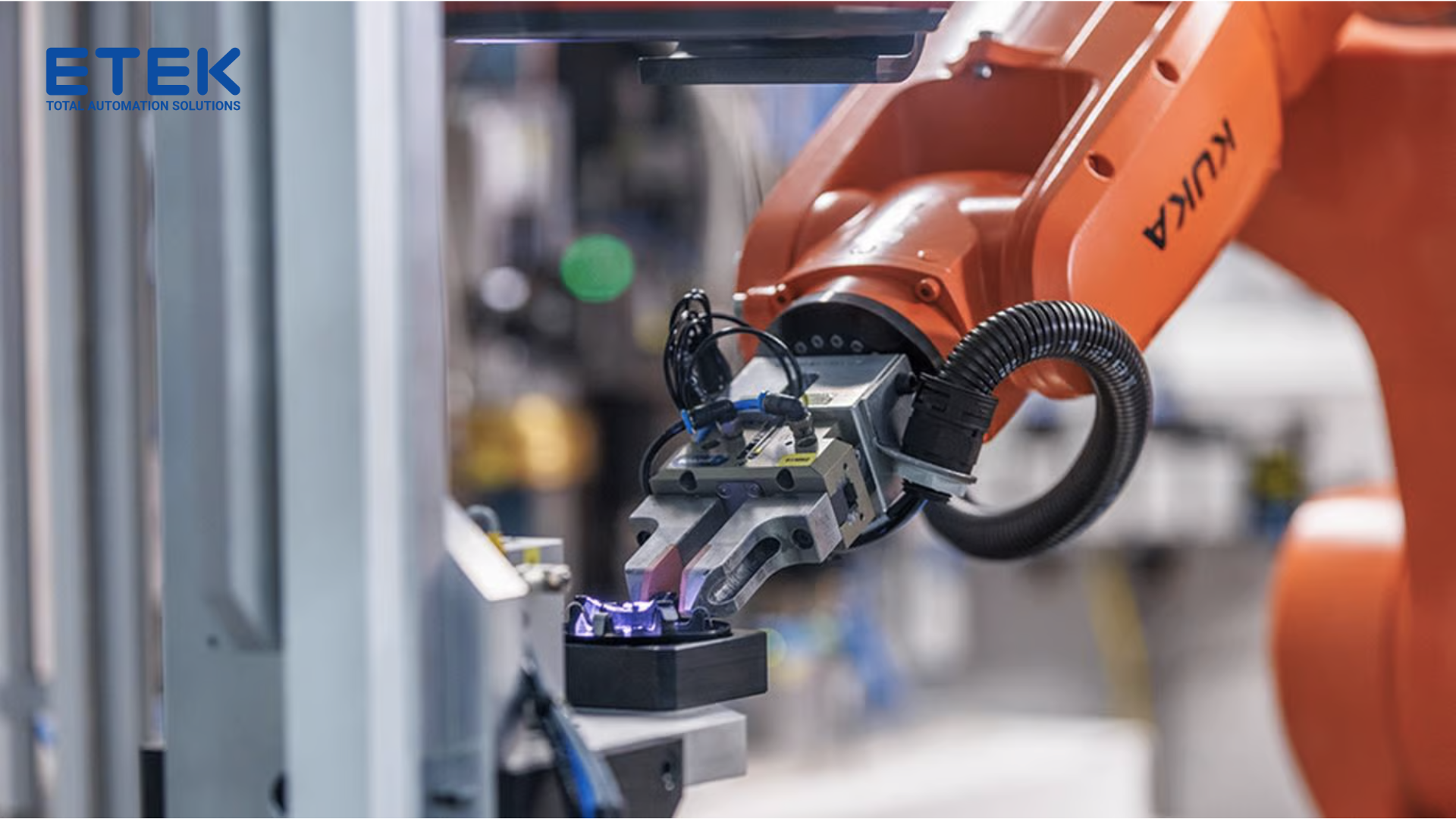
The solution is implemented as a closed, fully automated assembly cell, integrating six industrial robots operating simultaneously and precisely coordinated across every process step—from component feeding and assembly to comprehensive quality inspection.
The entire system is optimized to achieve a production capacity of up to 2 million pressure relief valves per year, effectively supporting mass production in the electric vehicle battery and automotive industries.
The process is fully standardized and automated, including:
This closed-loop process ensures that every pressure relief valve meets safety standards before leaving the production line.
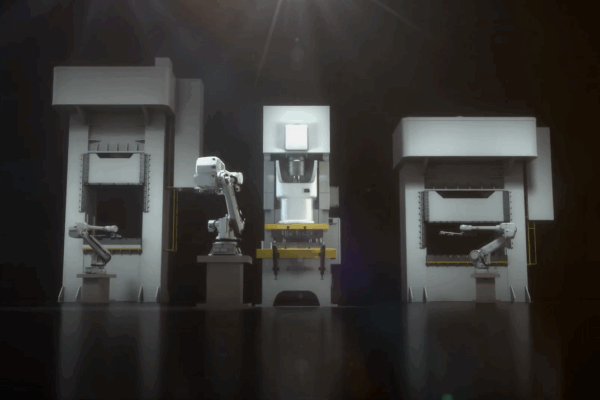
Are you looking for a press area automation solution? The stamping station automation solution deployed by ETEK will be the ideal choice for manufacturing enterprises that want to increase productivity -…
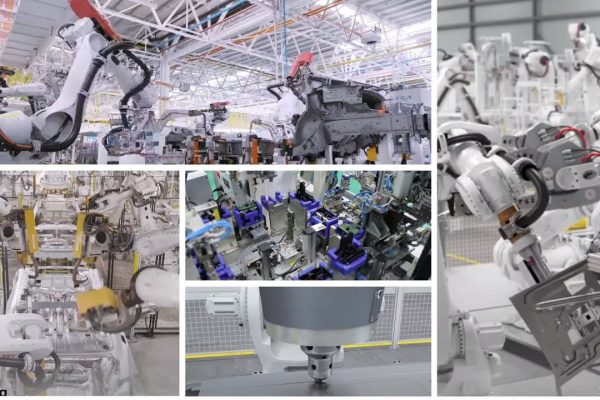
Our Assembly Solution is designed to enhance production efficiency, accuracy, and output while minimizing human intervention. By integrating advanced robotics, automated conveyance, and vision-guided technology, the system ensures precision in…
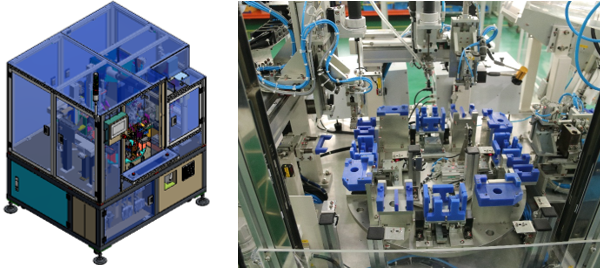
What is Screwiing Automation? In the past, before automation technologies were developed, screwing was primarily done manually using simple tools that relied on human labor, such as screwdrivers, handheld screw…
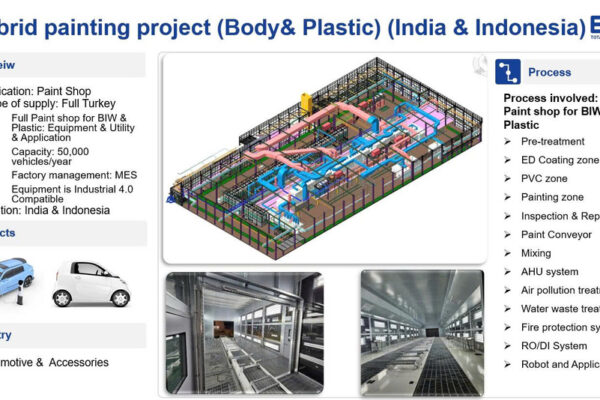
In modern automotive manufacturing, the painting process not only enhances aesthetics but also plays a critical role in determining product durability and overall value. ETEK provides a total automotive body…